panakkalayurvedapharmacy@gmail.com | +91 487 2699398



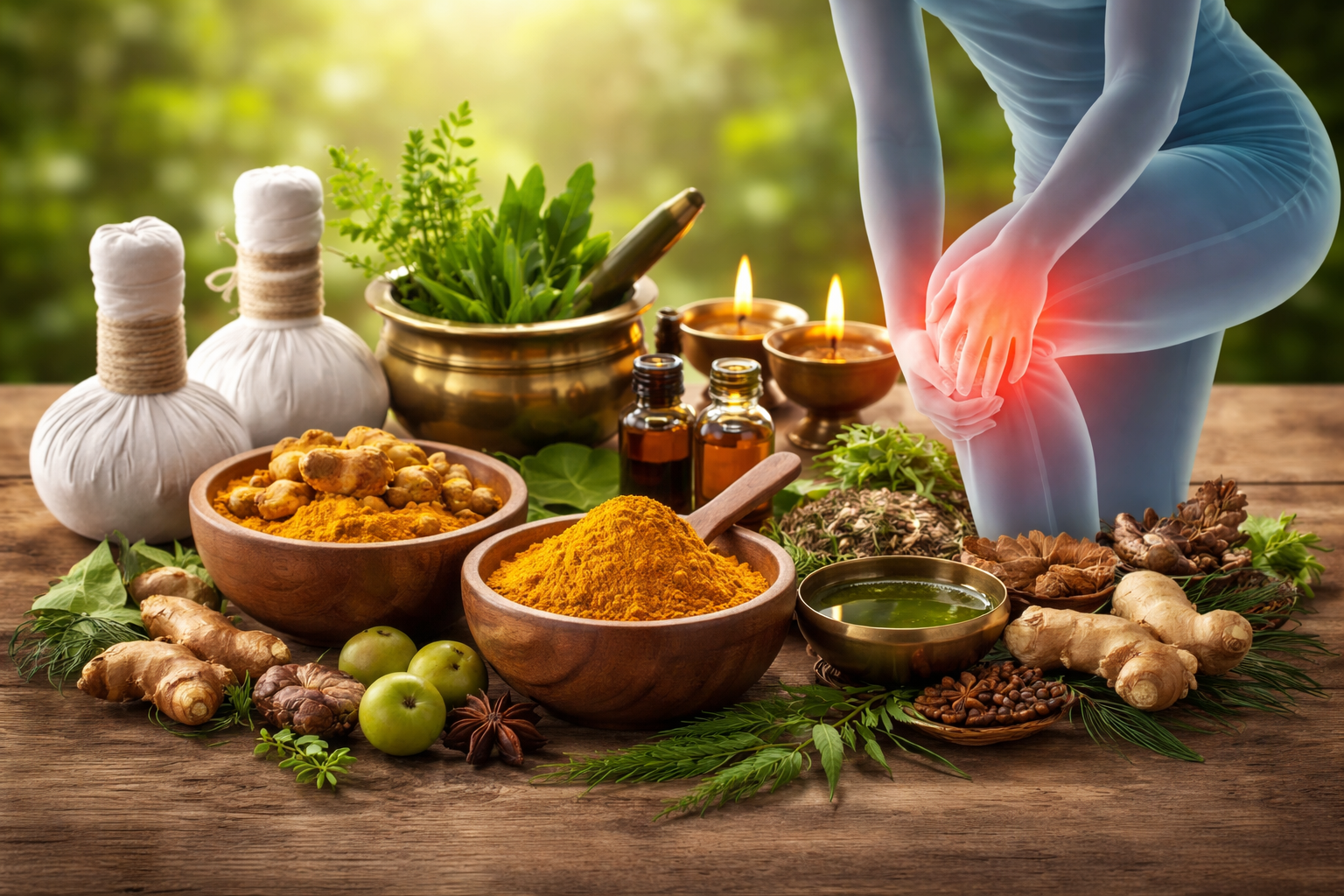
With aging-injuries, arthritis, or inflammation, along with continuing joint discomfort can be a new normal. This can have a great effect on one’s quality of life. Ayurveda offers a natural holistic approach to coping with joint pain by addressing not just symptom relief but balancing the core energies of the body and fostering long-term health for the joints.
Understanding Joint Pain within Ayurveda
According to Ayurveda, the pain on the joints are generally considered to be a problem of aggravated Vata dosha because it is the dosha that governs the movement, flexibility, and lubrication of the joints. This Aggravated Vata can cause stiffness, inflammation, swelling, and pain in the joints. Ayurveda looks at joint pain not just as a local problem of the affected joint but as a systemic imbalance that requires a comprehensive healing strategy.
Herbs and Natural Remedies for Joint Pain
Ayurveda encompasses a range of herbs that are renowned for their anti-inflammatory as well as analgesic properties, which help alleviate joint pain naturally. These herbs or the ayurvedic medicine for Joint pain can be used internally or in the form of oils and decoctions:
Sage Turmeric
Turmeric contains a powerful anti-inflammatory and antioxidant compound called the curcumin, which helps reduce swelling, improves circulation, and soothes joint discomfort. This would include turmeric in diet or supplementation regularly to support natural joint relief.
Ginger
With its properties of being warming and anti-inflammatory, ginger tea or addition to foods can help in having good blood circulation and lessened stiffness.
Ashwagandha
This adaptogenic herb reduces inflammation and stress-related triggers that usually come with chronic joint pain. It calms the nervous system and supports general joint comfort.
Shallaki (Boswellia) and Guggul
Both of them are potent anti-inflammatory herbs and find their application in Ayurvedic formulations for joint and arthritis care. They help reduce swelling and support joint flexibility.
Other Supportive Herbs
Other herbs utilized in Ayurveda to reduce inflammation and also for joint health include Nirgundi and Triphala.
Ayurvedic Approaches to Ease Joint Pain
1. Massage with Warmed-up Oil – Abhyanga
It is one of the vital self-care practices in Ayurveda, whereby massaging with herb-infused oils warms and nourishes joints, boosting local blood flow and easing stiff bodily organs. The basic action of the oils is that they permeate into the skin to soothe inflamed joints with care and to support smooth movement.
2. Light Movements and Exercise
Ayurveda encourages light exercise, like walking, stretching, and low-intensity aerobics. These movements build supportive muscle strength, promote flexibility, and slowly reduce pain.
Home Remedies and Daily Activities that Can Help Ease Joint Pain
Practical Ayurvedic options weave into the daily life of one for natural relief against joint pains:
Turmeric Milk: Traditionally an anti-inflammatory drink prepared with a blend of turmeric and warm milk which will help joint relief.
Ajwain Warm Compress: Apply hot pouches containing roasted carom seeds to the joints for relieving stiffness and enhancing circulation. Fenugreek Seed Paste Application of the paste reduces swelling and nourishes the joint tissues.
Epsom Salt Soak: Soaking sore joints in warm Epsom salt water relaxes muscles and mitigates discomfort. These remedies aim at cutting inflammation, improving circulation, and nourishing the area locally without the use of harsh chemicals.
Dietary and Lifestyle Factors
Ayurveda gives equal importance to diet and lifestyle as it does to herbs and external treatments. To support the joints:
- Include anti-inflammatory foods such as turmeric, ginger, and leafy greens.
- Avoid cold, dry foods that can aggravate Vata dosha.
- Keep yourself hydrated to maintain the lubrication of your joints.
- Maintain a proper routine that includes good resting with mild and effective exercise.
When to seek professional care
Though the home remedies and herbs are effective, persistent or severe joint pain-especially with the swelling, warmth, or loss of function-may require specialized and personal Ayurvedic care. An Ayurvedic practitioner, and in our case ayurvedic clinic in Thrissur, can help to develop treatment plans, which will be combining the use of herbal medicines with dietary guidance as well as appropriate therapies.
Conclusion:
A Whole-Body Approach to Joint Comfort Ayurveda addresses joint pain as no mere symptom, but rather as a sign of deeper imbalance. You can nurture natural joint relief and improved mobility through the combination of herbal remedies, warm oil care, supportive diet, and gentle movement. Consistent care and certain lifestyle adjustments allow Ayurveda to offer holistic avenues toward managing joint pain and preparing you for life in comfort and balance.